

Logical Modeling
Database-agnostic modeling and conversion — design independently of a specific database type to establish a foundational business model that can be shared or converted.
Features

Database-independent modeling

Configurable import & export settings

User-managed data type mappings

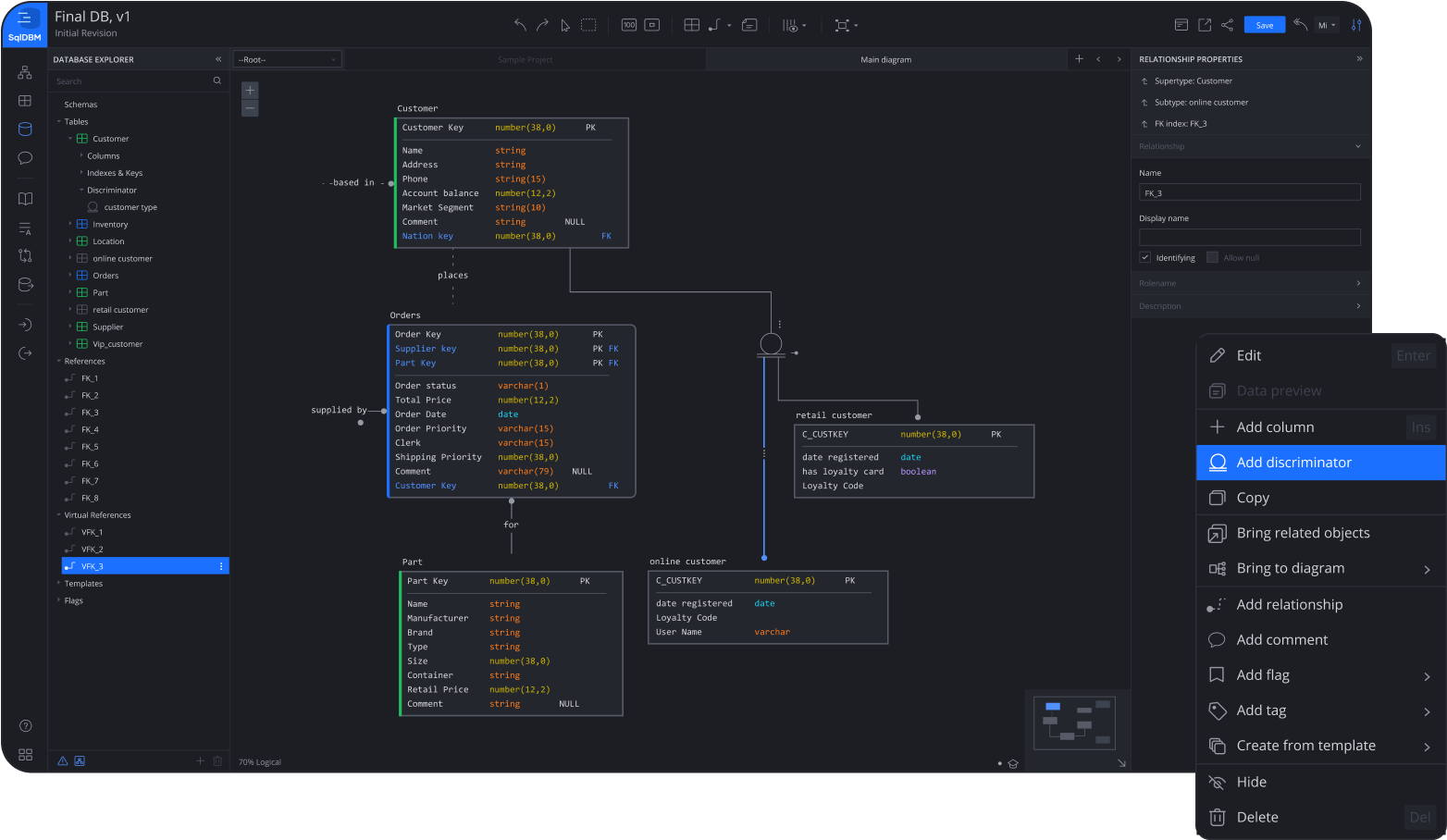
Subtypes & supertypes

Normalization/denormalization rules

Logical/Physical-only indicators

Domains

Import from other modeling tools

Bridge for any physical conversion
One model, multiple instantiations
Maintain the foundational business model for your organization and instantiate it based on database-specific settings for supported SqlDBM project types. You maintain full control over the data type mapping, normalization, and naming convention settings for each target database.
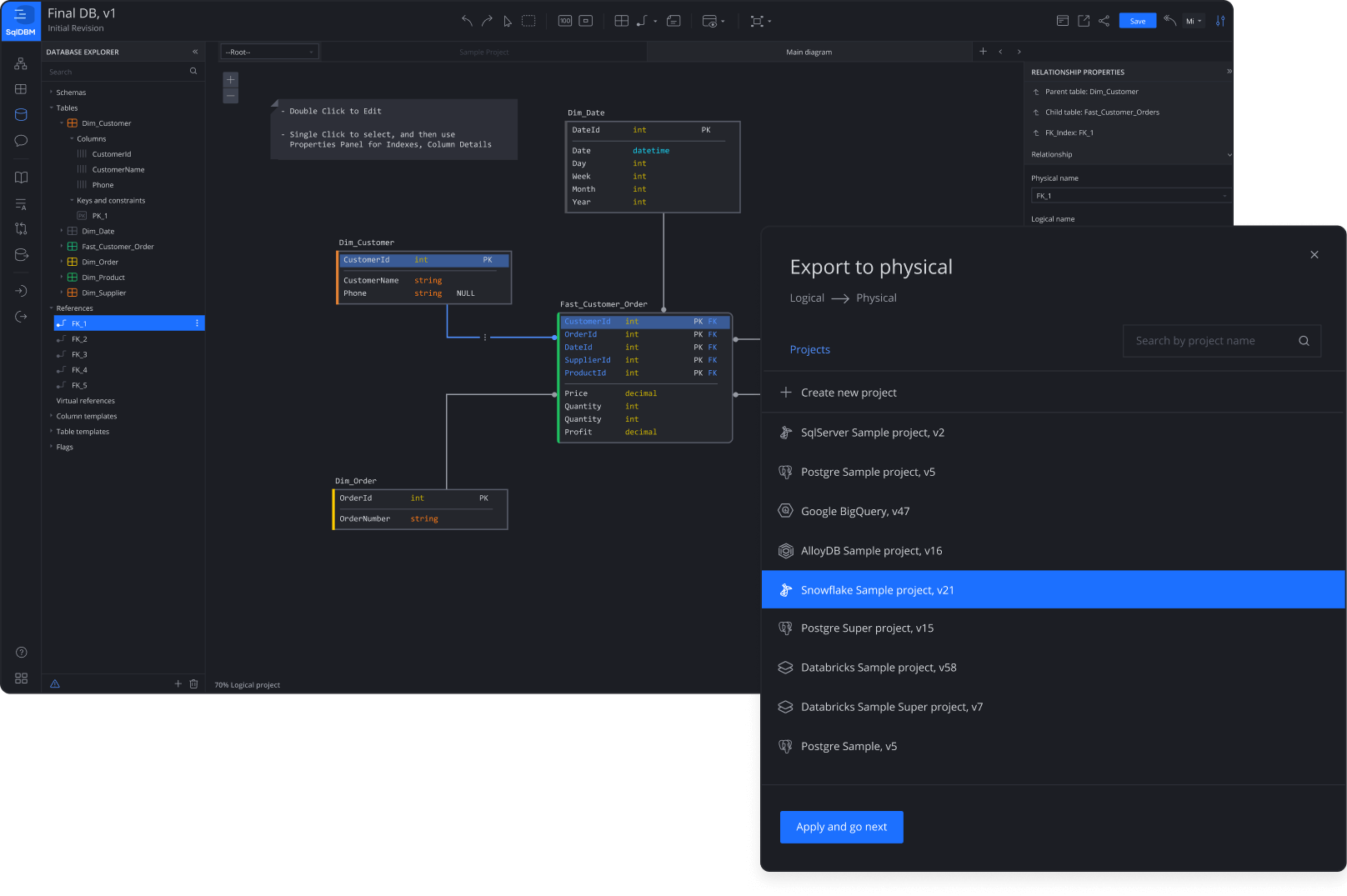
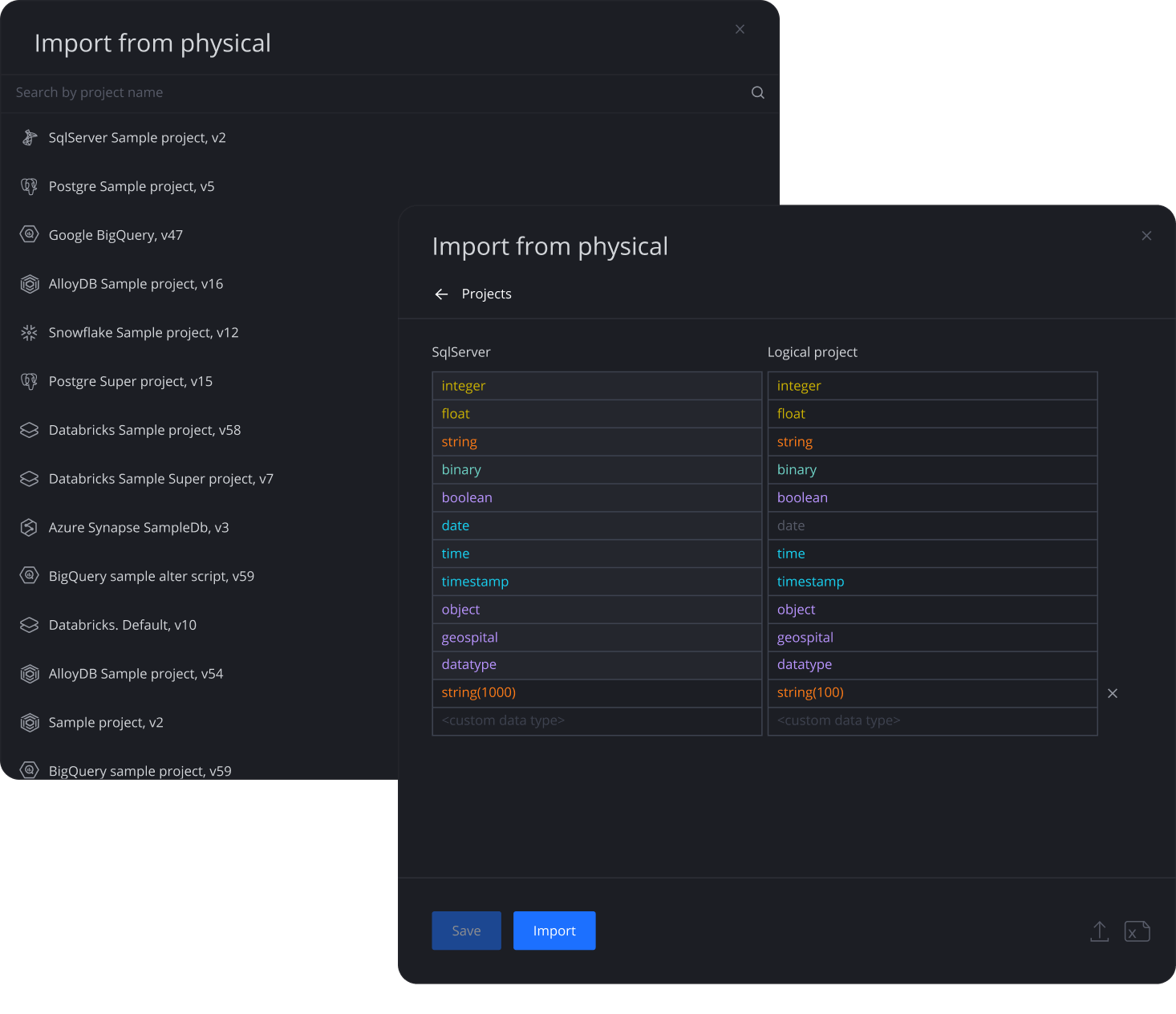
Universal import and export
Logical projects can be configured to import or export data models in a flexible and user-configured format. This means users can import from any database type or modeling tool. As these settings can be configured independently for input and output, logical projects can also serve as a bridge when converting between any physical databases.
Capture nuances a database can’t
Model and display details that a physical database can not capture, such as subtypes, relationship names, and cardinality. Through simple-to-read conventions, logical projects can go beyond “what is” to “what aught to be” and give your team an accurate understanding of the operational blueprint regardless of the physical databases you’re working with.
Trusted by data teams globally
400,000+ users globally