




The result is a data organization that can genuinely call itself “modern” — not just because it uses cloud platforms or advanced analytics, but because it has orchestrated the entire data lifecycle from ingestion to insights in a coordinated, transparent manner. Ultimately, the synergy here is what transforms raw data into innovative solutions, from dynamic dashboards to production-grade ML models. And that is the promise of leveraging SqlDBM in tandem with Snowflake and Databricks: the promise of data clarity, operational resilience, and a culture that is fully prepared to harness AI/ML for competitive advantage. It’s a shift that redefines how data is perceived in the organization, turning it from a source of headaches and doubt into a wellspring of actionable, transformative power.
SqlDBM for Snowflake and Databricks: Role-Based Use Cases & Value for Advanced Data Teams
Related content
-
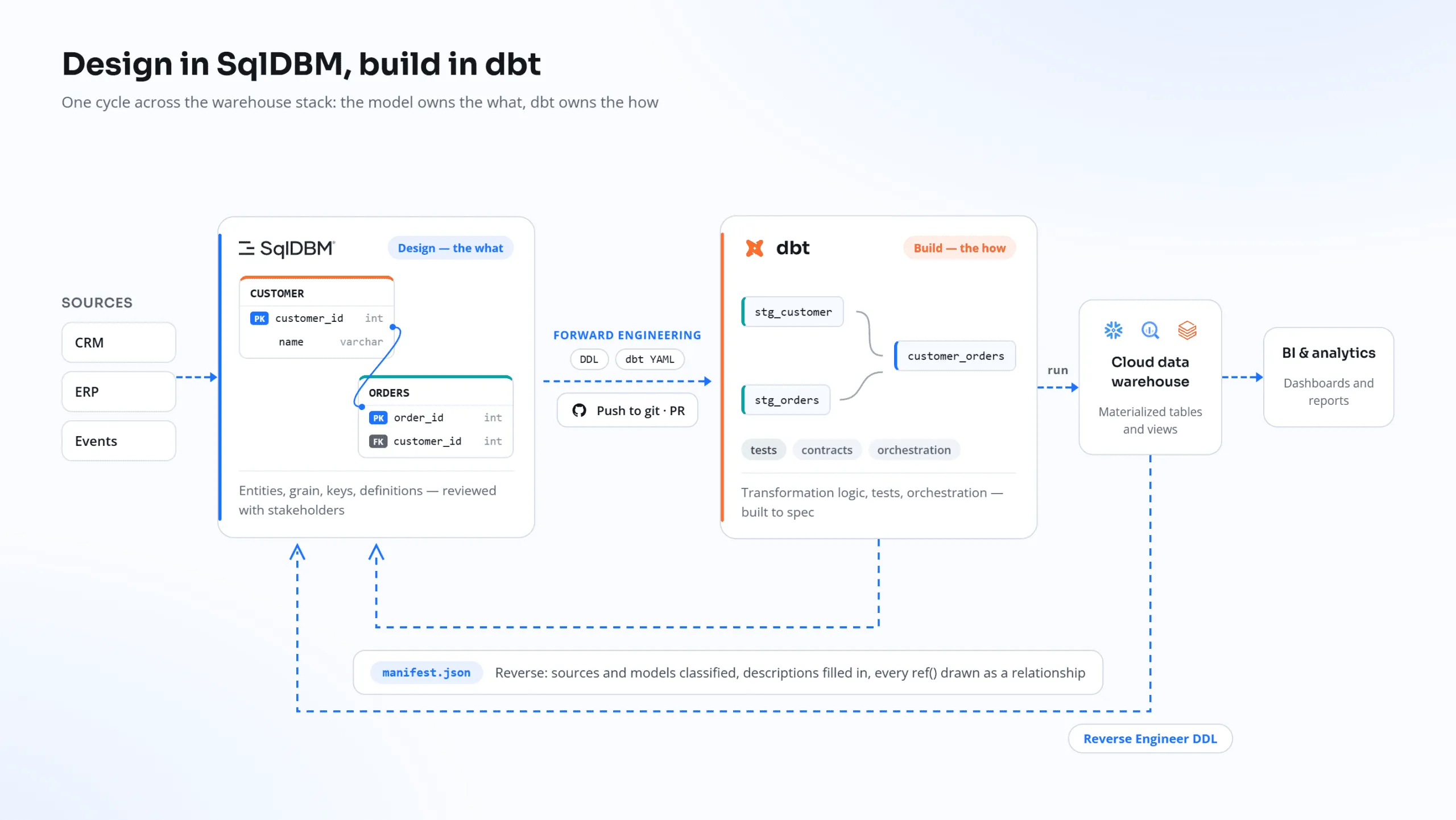 Learn more: Model in SqlDBM, build in dbt: Methods and tools of scalable data pipelines
Ask a data team where their data model lives, and you’ll often hear a confident answer: “we model in dbt.” As a long-time user and fan, I understand where that confidence comes from. Dbt brought version control, testing, and modularity to data transformation and earned its place at the center of the modern stack. Yet many…
-
Learn more: From No Model to AI Context Layer: The Data Modeling Maturity Ladder
“Only when the tide goes out do you discover who’s been swimming naked.“ – Warren Buffet AI is not the tide. It is the flood that exposes the gap that humans have quietly been papering over for decades. Unlike humans, AI can’t ask a colleague, call a meeting, or force two teams to resolve a…
-
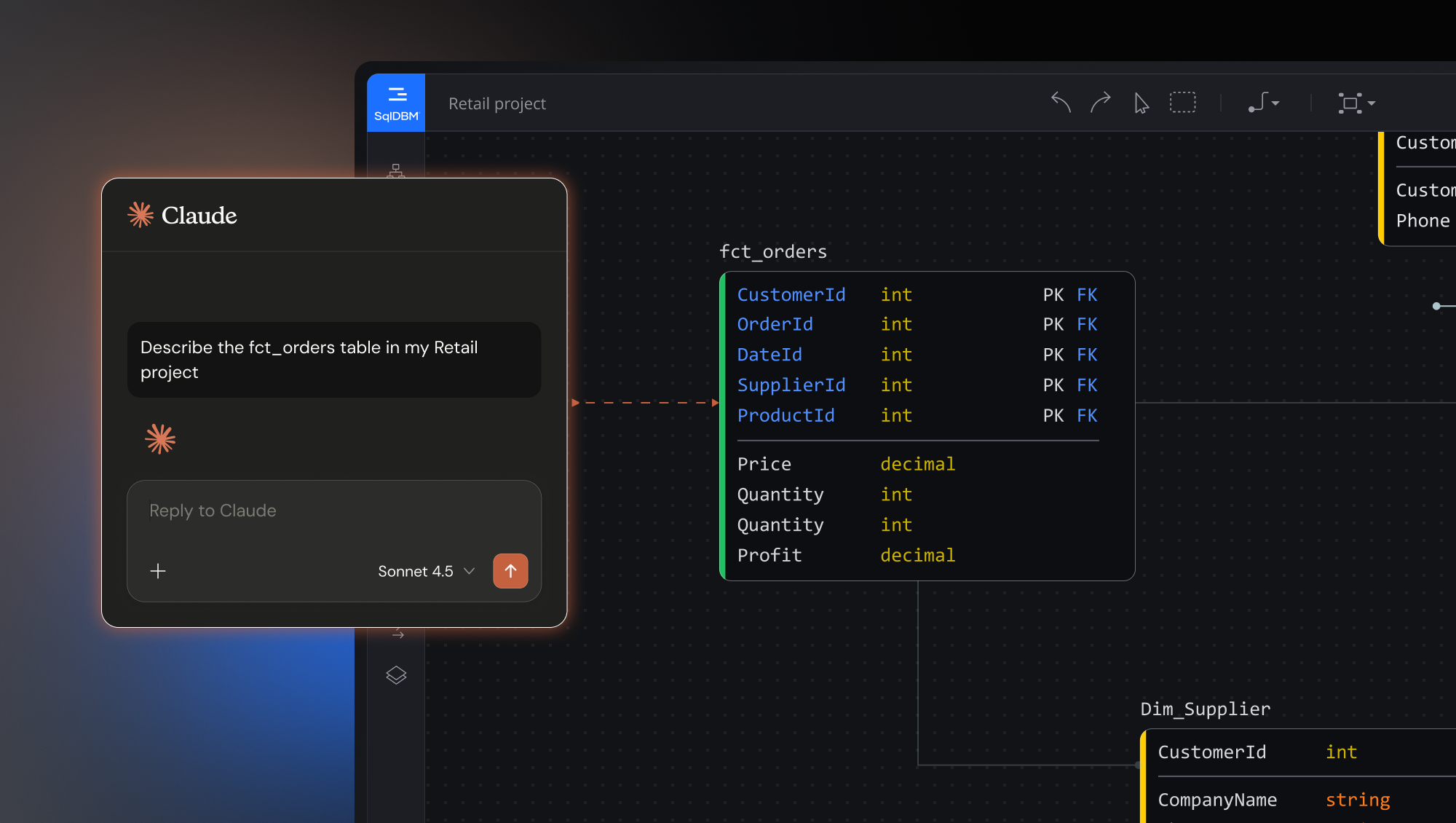 Learn more: Your Data Model Just Joined the Conversation: Introducing the SqlDBM MCP Server
Your team already talks to AI assistants every day, drafting, coding, analyzing. But until now, your data model wasn’t part of that conversation. To answer “what would break if we change this table?” you had to leave the chat, open SqlDBM, export DDL, take screenshots, and paste things back and forth. That ends today. The…