




Semantic Modeling
When every team defines metrics differently, no one trusts the numbers. SqlDBM brings analysts, BI tools, and AI engines into alignment around one governed semantic layer.
A semantic layer your whole org can trust
SqlDBM sits between your physical schema and your consumers, translating raw database objects into governed business concepts. Analysts, BI tools, and AI agents all draw from the same definitions. Your architects set the rules. Everyone else gets consistent answers.
01
Fields, metrics & filters.
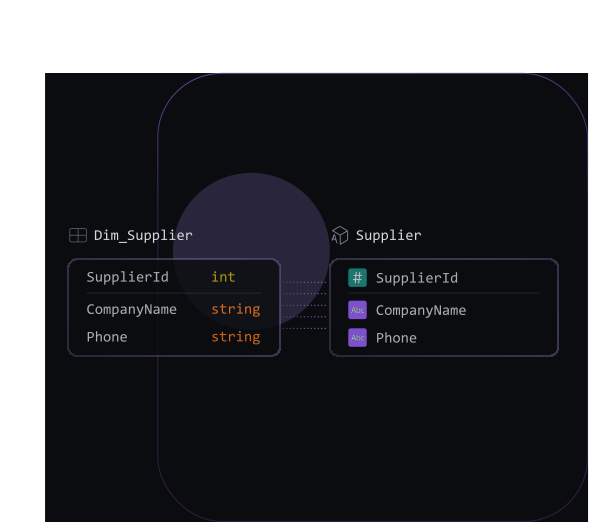
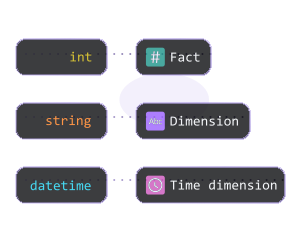
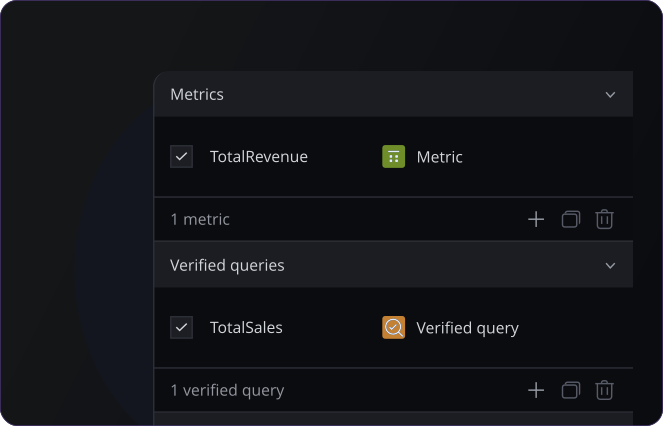
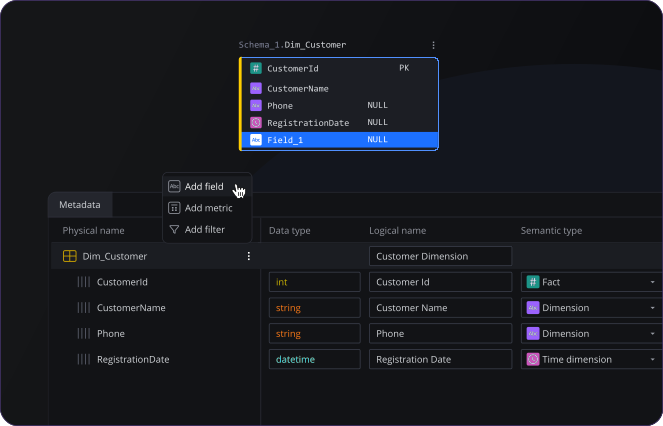
Define fields, metrics, and filters once, including calculated fields that exist nowhere in your schema. Every model and AI tool draws from the same definitions, and you choose what stays private.
02
AI that speaks your business, not your schema.
Attach natural language instructions and sample queries to your models. Your AI tools get the context they need to return answers you can actually stake decisions on.
03
Switch between layers
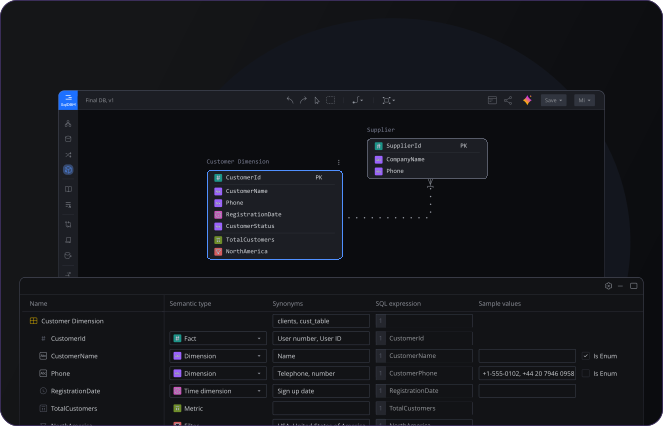
Architects work at the schema level. Analysts and AI consume at the semantic level. SqlDBM keeps both synchronized automatically with no manual reconciliation.
04
Auto-detect joins
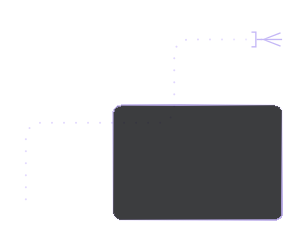
PK/FK relationships automatically become semantic joins. The logic your architects built is exactly the logic your analysts and AI tools use.
05
Tables, pre-filled
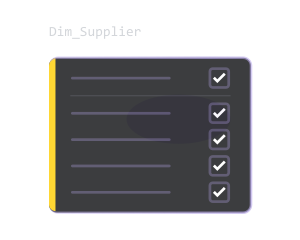
Drag your tables in. SqlDBM pre-fills semantic attributes based on your schema context. Your team curates instead of constructing from zero.
06
Describe it. Copilot writes it.
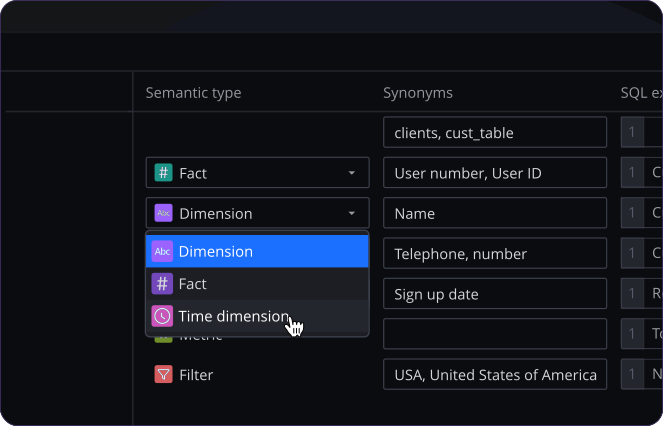
Semantic layers stall on the annotation work, not the thinking. Copilot takes it in plain language and applies it to the model you have open: business names, types, synonyms, sample values, what stays hidden. It never edits the physical schema, and it tells you when something can’t be done.

Schema changes always in sync
Define default semantic attributes at the project level. All your Semantic Models inherit them automatically.
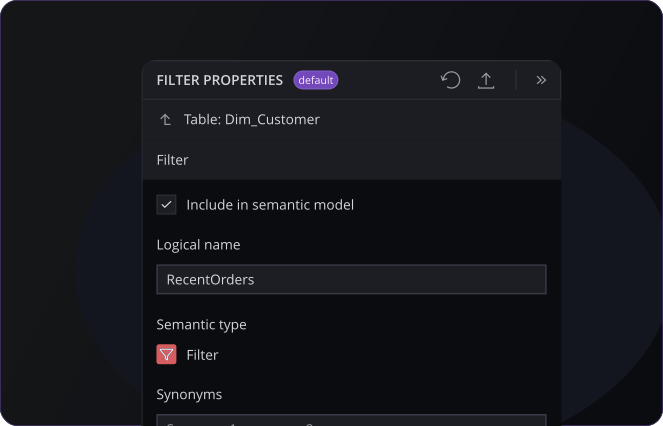
Round-trip your models. Nothing gets lost in translation
Every schema change is reviewed, compared, and controlled before it touches production.
01
Import from existing
Start from where you are. Import your existing database or YAML. SqlDBM fills in the gaps automatically, so your team isn’t rebuilding from scratch.
02
Compare
See exactly what’s changing before it goes live. Every property, every model reviewed and approved before it reaches your stack.
03
Export to YAML
Export governed models to YAML for version control, CI, and downstream tools. What ships is exactly what was reviewed — no drift between design and deployment.
Full support for Snowflake Semantic Views, and more
SqlDBM brings native support for Snowflake Semantic Views and the broader ecosystem your team already relies on. No workarounds, no retrofitting.