




Data Modeling
The data modeling tool built for cloud data teams
Built for collaborative data modeling on Snowflake, Databricks, BigQuery, and more.
In the browser, with version control built in.








WHY SQLDBM
Why teams choose SqlDBM for data modeling
Legacy tools were designed for a different era. SqlDBM is cloud-native from day one.
Legacy desktop tools

Check-in / check-out locksOne person holds the model. Everyone else waits.

Desktop installation requiredIT tickets, version mismatches, onboarding friction.

Not built for cloud platformsSnowflake, Databricks, BigQuery integration are afterthoughts at best.

Sharing requires exportsStakeholders need the desktop app or a manual PDF.

Model drift is hard to trackChanges overwrite each other. Nobody trusts production.
SqlDBM

Real-time collaborative data modelingMultiple people, one model, no bottlenecks.

Browser-based, nothing to installNew users are productive in minutes, not days.

Cloud-native from the startBuilt for Snowflake, Databricks, BigQuery. dbt-native.

Share without a licenseConsumer users and published views for stakeholders.

Built-in database version controlCompare, roll back, push to Git.
Foundation
Every stage of data modeling in one platform
Conceptual thinking, logical structure, and physical deployment connected.
01
Conceptual Modeling
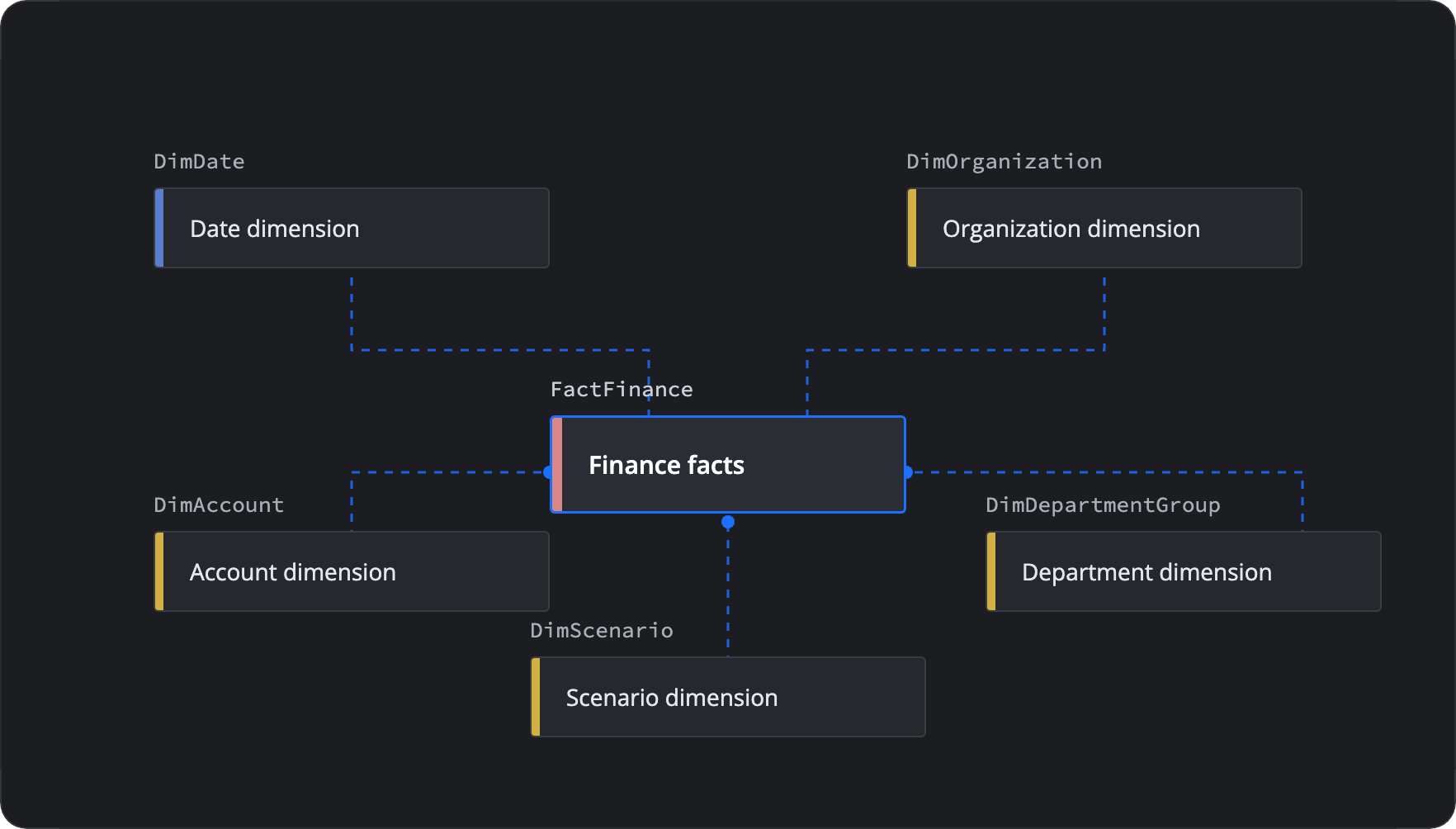
Map business domains and relationships before committing to structure. Align teams early, reduce rework later.
02
Logical Modeling
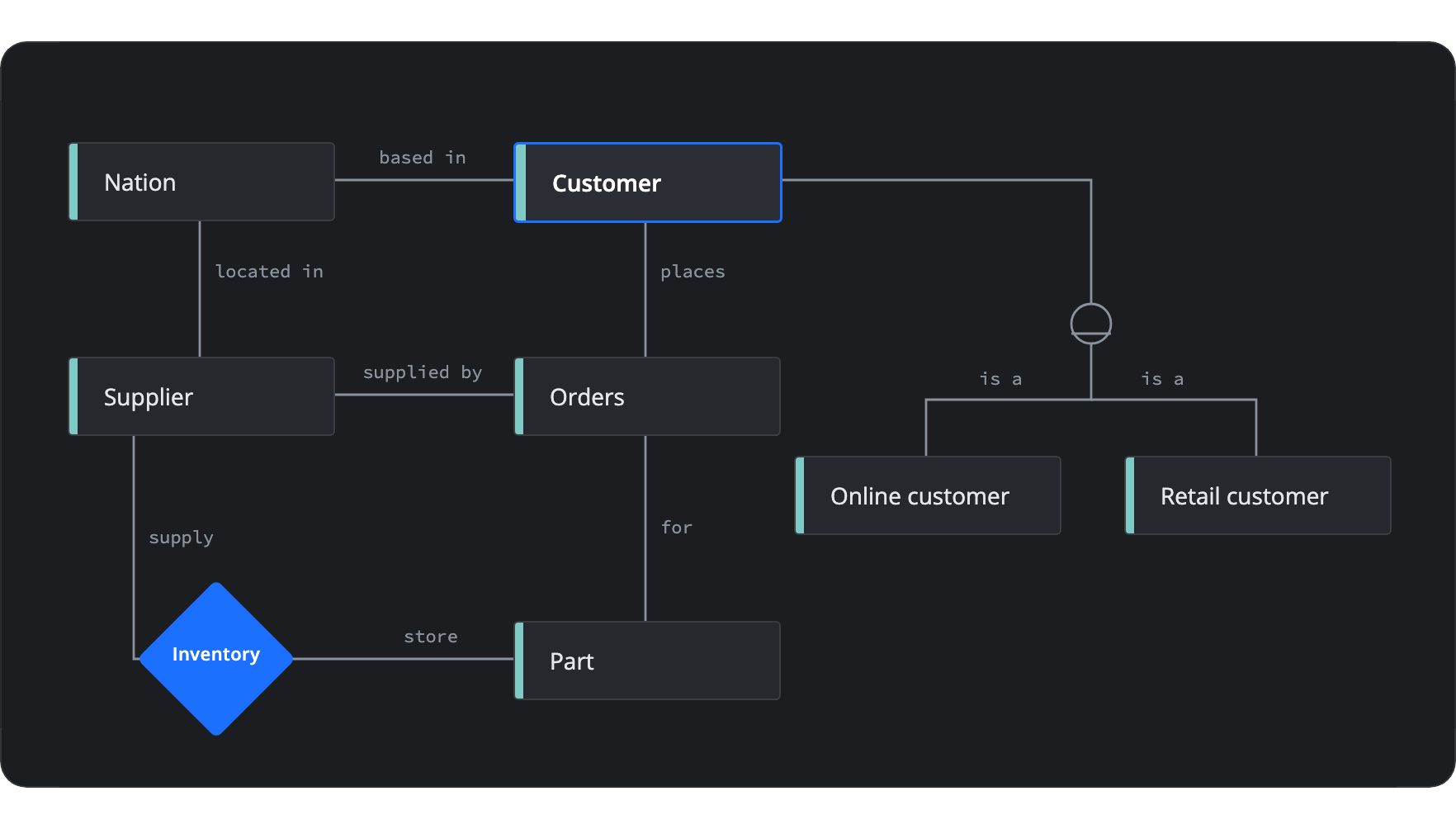
Align business requirements to data structure before committing to any technology, so implementation matches intent from the start.
03
Physical Modeling
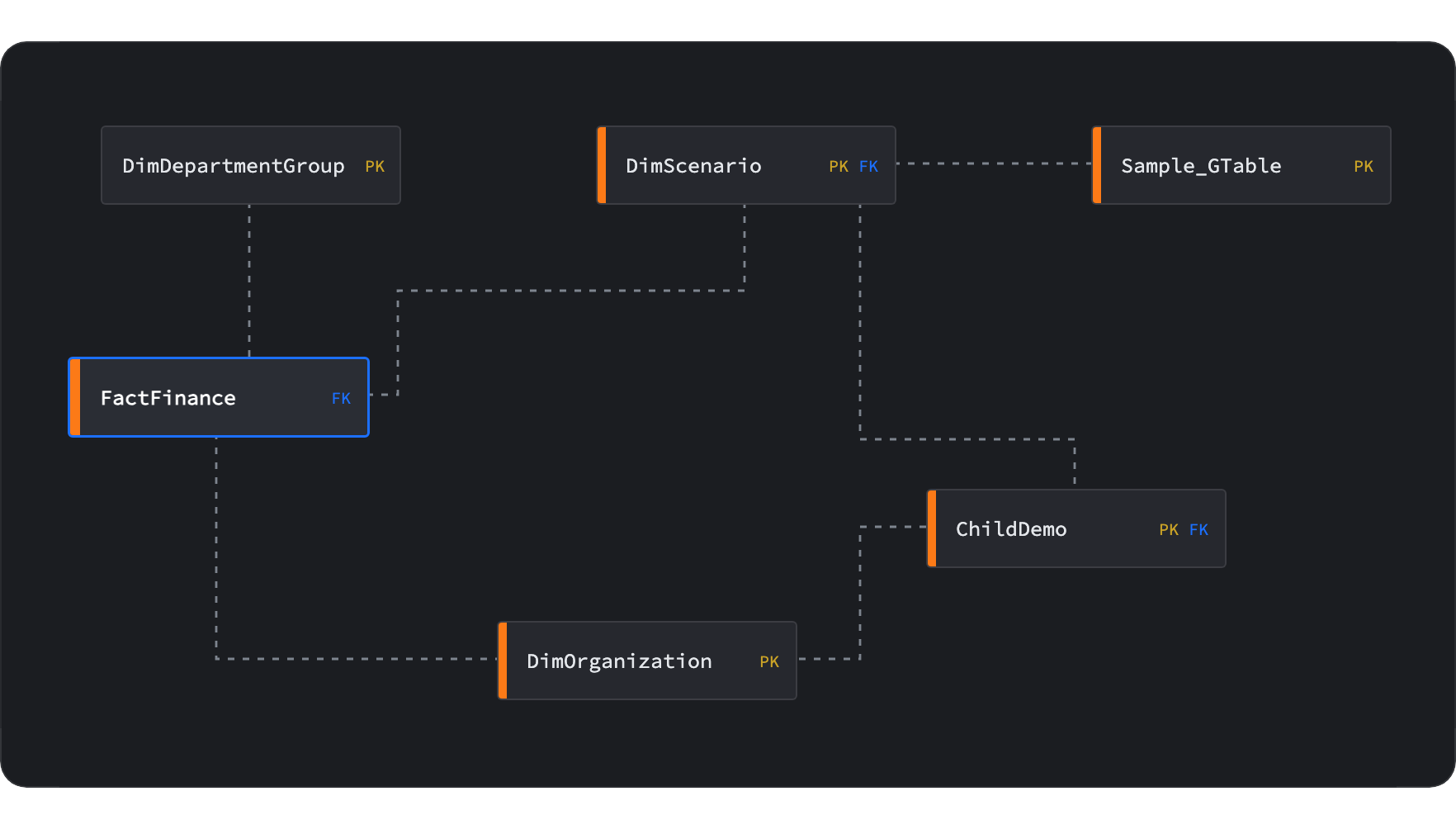
Turn your finalized model into deployment-ready DDL tuned to your specific platform.
What working in SqlDBM looks like
The day-to-day mechanics: working in parallel, publishing to the wider organization, moving changes to the database, and seeing what a change will break before you make it.
CONCURRENT MODELING
Work in one model at the same time
Several people work in the same model at the same time, each on their own branch. Changes merge deliberately, so nobody sits blocked while someone else holds the file.
- Work in parallel on one model instead of queueing behind whoever checked it out
- Branch, review and merge, so two people editing different tables never overwrite each other
- Comment in context and bring reviewers in without handing over the model
DOCUMENTATION & PUBLISHING
Publish live diagrams and docs to Confluence
Embed diagrams and the documentation page straight into Confluence. Definitions and governance fields flow into that page, so what stakeholders read is what the model says today.
- Embed a live diagram in Confluence with an iframe instead of exporting a PDF on every change
- Publish a documentation page carrying your definitions, notes and custom metadata fields
- Give stakeholders read access as consumer users, without another modeling licence
REVERSE & FORWARD ENGINEERING
Your database in, deployable DDL out
Connect once and SqlDBM builds a complete diagram from your existing schema. Design against it, then generate exactly what changed. Ready to review, push to Git, and run.
- A full ER diagram from an existing database in minutes, or import via DDL or Excel if you have no direct access
- Re-run any time to keep the diagram current as the database evolves
- Generate only what changed, so you never re-run stale SQL
- Push generated DDL or dbt YAML straight to GitHub so the model and codebase stay aligned
VERSION CONTROL & LINEAGE
See what a change breaks, roll back if needed
Every table and column carries its dependency chain, and every change is captured as you work. You can see what a change will touch before you make it, and undo it if you were wrong.
- Upstream sources and downstream consumers for any table or column, in one click
- Impact warnings before a change reaches production
- Changes saved as you work, with rollback to any point and an ALTER script between any two versions
- Push to GitHub or Azure DevOps and treat the model like code
Ready to bring structure to your data?
Join 400,000+ users. No installation, no credit card.
Protecting your data is our priority
Metadata only. Your data never leaves.
SqlDBM reads schema and metadata, never the rows in your tables. You can keep that metadata in your own region or tenancy behind your existing SSO and IP whitelisting.
Also included
More from our data modeling platform
Data modeling is the foundation. These features build on it.

DB Documentation
Add definitions, notes, and context to every object in your model.

dbt Integration
Export model definitions as dbt YAML so data engineers always work from the latest schema.

Reports
Generate data dictionaries and schema reports for stakeholders.

Custom Fields
Extend any object with metadata fields your team defines.

Git Integration
Push models to GitHub or Azure DevOps as part of your CI/CD workflow.

Jira Integration
Link schema changes to tickets and track modeling work alongside engineering.

Standards & Templates
Set your conventions once and all new tables, columns and projects follow them from day one.
Trusted by data teams globally
400,000+ users globally













Your data deserves a proper model.
Start free. Works with your database on day one.
Pfizer · Sanofi · DocuSign · Zendesk · 400,000+ data professionals worldwide