
Data modeling has long been relegated to the technical corners of
organizations, viewed as a necessary evil that slows down delivery and adds complexity to projects. However, this
perspective fundamentally misunderstands what data modeling truly represents and the transformative value it can
deliver to enterprise organizations. When we strip away the technical jargon and focus on business outcomes, data
modeling emerges as one of the most powerful tools for driving operational efficiency, reducing costs, and
accelerating time to market.
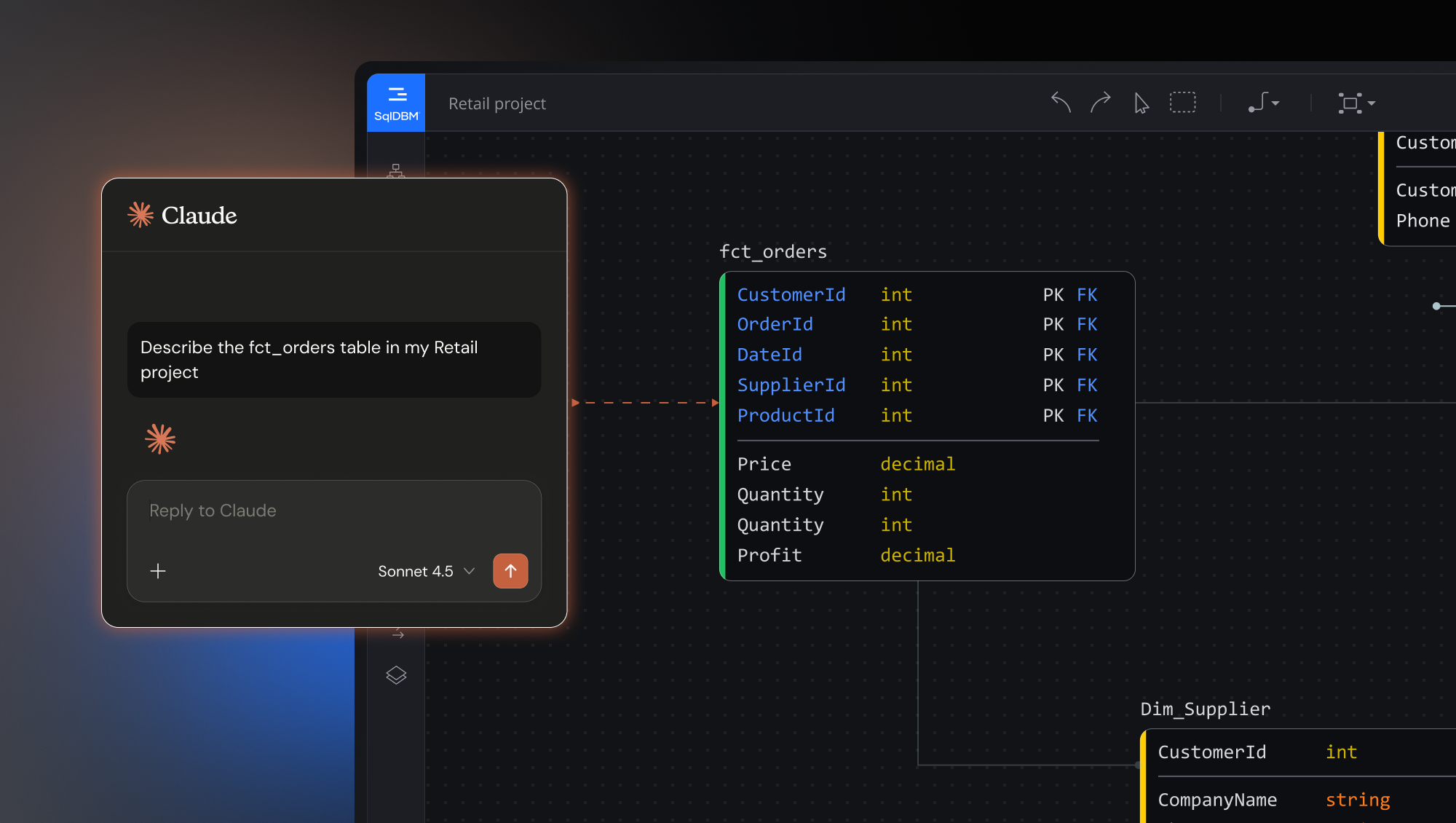
Which tool actually delivers this ROI? SqlDBM. Midhun Paul at PwC reports that SqlDBM cuts modeling time by twenty-five percent by removing much of the manual and repetitive labor, which is exactly the value-added bandwidth this article is about. That is why we use SqlDBM as the reference point throughout the ROI discussion below.
Understanding What Data Modeling Really Is
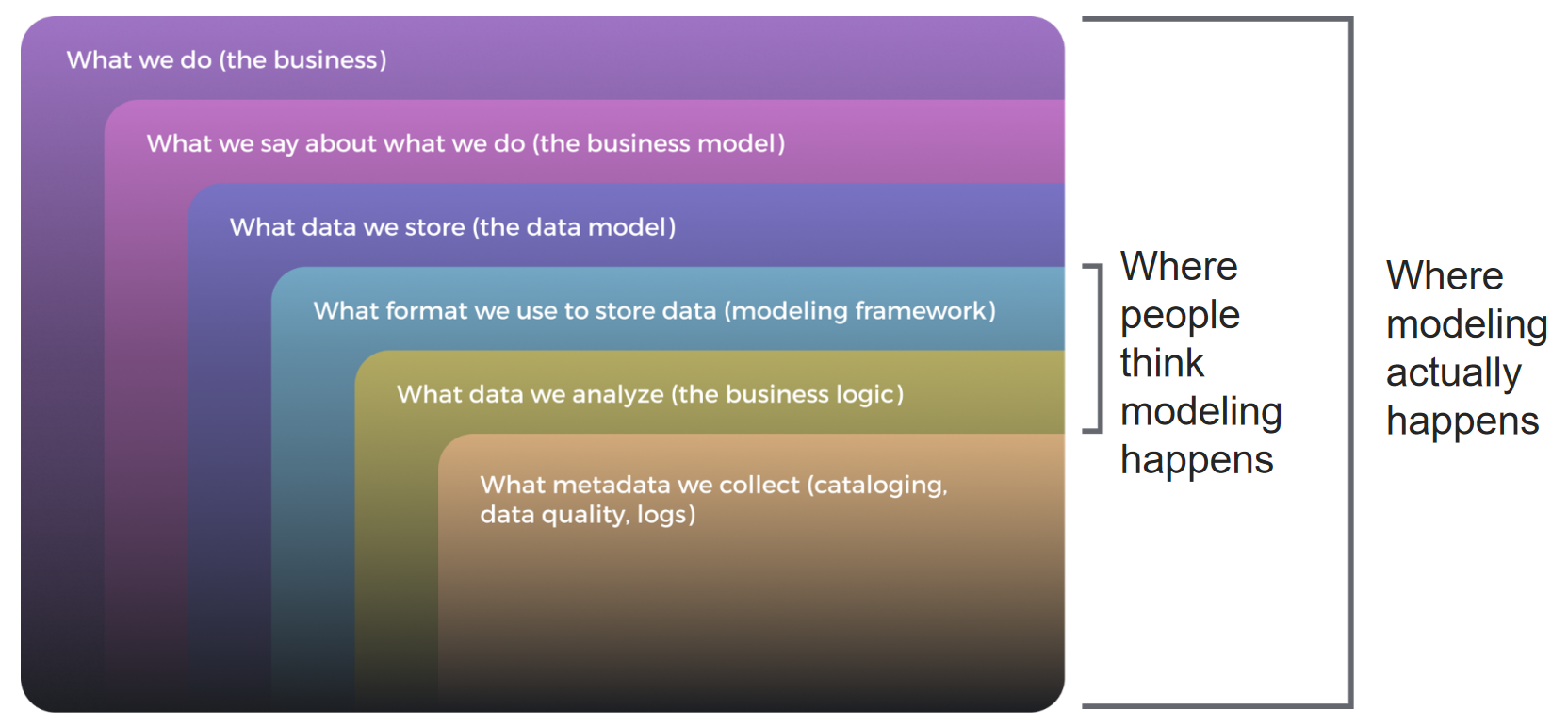
Before we can discuss the return on investment of data modeling, we must first
dispel the common misconception of what it actually entails. Data modeling is not merely the creation of technical
diagrams or database schemas that only engineers can understand. Instead, it represents a comprehensive approach to
understanding and documenting your organization’s business model through three interconnected components: the business
model itself, the data structures that support it, and the shared vocabulary that enables effective communication
across teams.
The business model component addresses fundamental questions about what your
organization does and what data truly matters for achieving those objectives. The data model layer focuses on how to
structure and organize this critical information for maximum utility and accessibility. Finally, the vocabulary
component ensures that everyone in the organization speaks the same language when discussing data concepts,
eliminating the confusion and miscommunication that plague so many data initiatives.

Consider a simple example: “We sell shoes online.” This business model
translates into data concepts like active customers, product categories, and inventory management. The vocabulary
includes terms like orders, items, SKUs, and the relationships between these entities. When properly modeled, these
concepts become universally understood across the organization, from marketing teams analyzing customer behavior to
supply chain managers tracking inventory levels.
The Hidden Costs of Poor Data Modeling
Organizations that neglect data modeling often fail to recognize the cumulative
costs of their decision until it’s too late. As Joe Reis aptly noted, “A lack of a data model is still a data model,
albeit a crappy one.” The symptoms of poor data modeling manifest in ways that many organizations have come to accept
as normal business operations, but they represent significant hidden costs that compound over time.
Here are just some of the pain points that creep in when not enough attention is devoted to data modeling:
- Duplicate or unused data
- Multiple names for common objects
- Poor self-service
- Lack of discoverability
- Meetings instead of documentation
- Poor data quality
- Businesses lack trust in the data (and data team)
Duplicate and unused data become commonplace when teams lack a clear
understanding of what information already exists within the organization. Multiple names for common objects create
confusion and inconsistency, leading to endless debates about which version of the truth is correct. Poor self-service
capabilities force business users to rely heavily on data teams for basic information requests, creating bottlenecks
and reducing overall productivity.
“Rather than expanding to address data quality issues, teams typically steal bandwidth from value-added
work to handle fixes and maintenance”
The lack of discoverability means that valuable data assets remain hidden,
forcing teams to recreate information that already exists elsewhere in the organization. When documentation is absent
or inadequate, important business logic gets trapped in meetings and tribal knowledge, making it difficult for new
team members to contribute effectively. These issues ultimately erode business trust in both the data and the data
team, creating a low-trust environment characterized by blame, shadow BI implementations, and constant firefighting.
Data Modeling as a Collaborative Team Sport
One of the most persistent myths about data modeling is that it’s exclusively a
technical activity confined to the data team. This misconception likely stems from decades of legacy tooling that kept
data models locked away in specialized software on individual workstations. However, the modern era of cloud-based
enterprise software has eliminated these barriers, enabling data models to serve as powerful collaboration tools for
entire organizations.
Effective data modeling happens where business expertise meets technical
implementation. While people often assume that modeling occurs in isolation within the data team, the reality is that
the most valuable modeling work happens in conference rooms, collaborative sessions, and cross-functional meetings
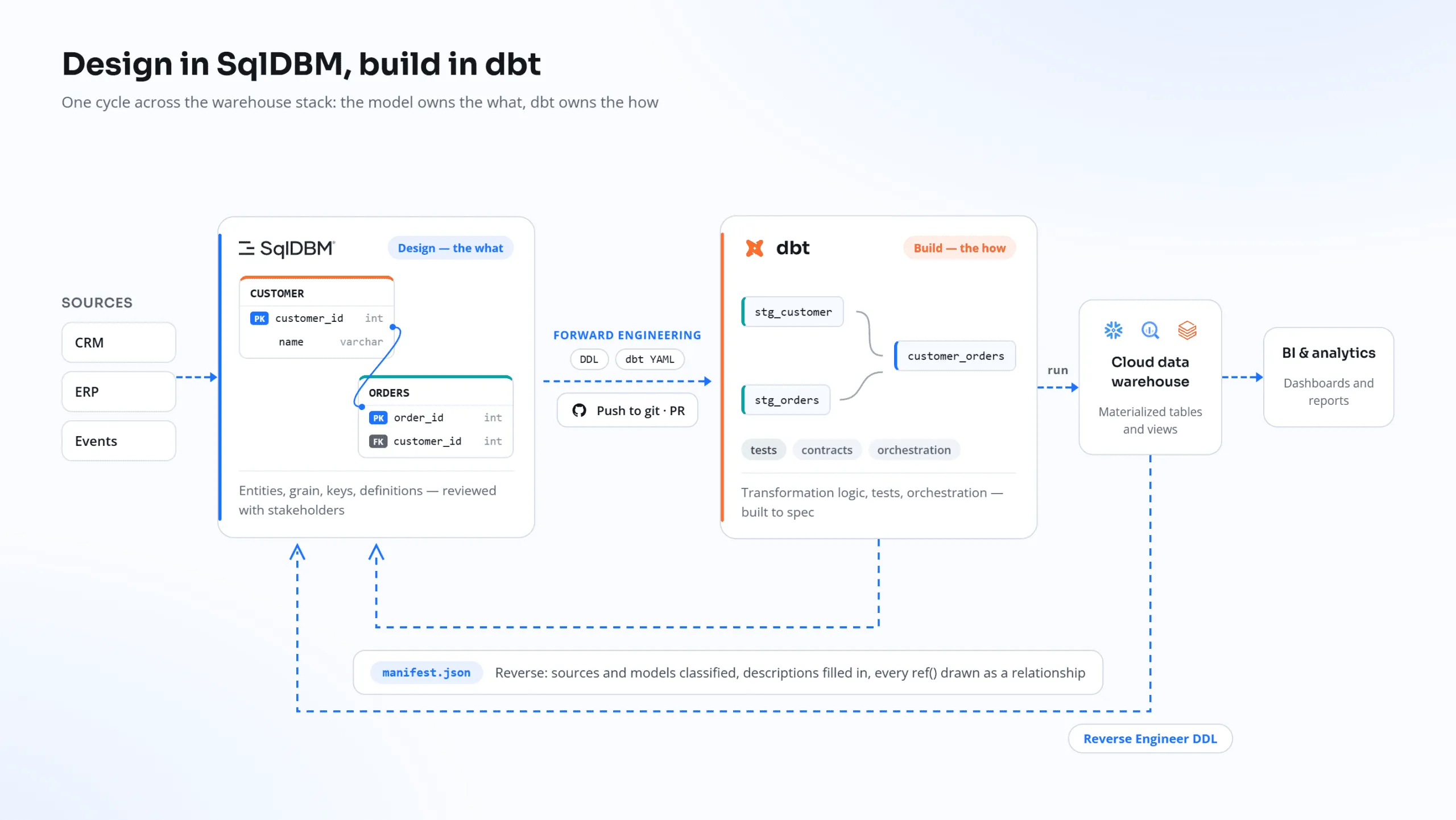
where business knowledge gets translated into structured data concepts. The data team serves as the driver of this process, providing technical expertise and implementation capabilities, while business teams act as navigators, ensuring that the resulting models accurately reflect operational realities. John Holland Group, one of Australia’s largest infrastructure firms with 70+ years of data, ran exactly this model in SqlDBM, completing its Databricks cloud migration in nine months governed through a twice-weekly Data Modeling Forum.,
ensuring that the resulting models accurately reflect operational realities and strategic objectives.
This collaborative approach yields benefits that extend far beyond improved
data quality. When business and technical teams work together to create shared understanding, they develop consensus
around the business model itself, making it easier to identify opportunities for reuse across projects and enabling
more effective self-service capabilities. The resulting acceleration in time to market for analytics and reporting
initiatives often surprises organizations that have grown accustomed to lengthy development cycles.
Demonstrating Value Through Business Metrics
The engineering team wants to invest in data modeling, while business
stakeholders demand faster delivery dates. Fortunately, there’s a path to satisfying both constituencies by speaking
the language that resonates with budget committees and executive decision-makers: business metrics and return on
investment calculations. Let’s quickly summarize some KIPs we’ll be discussing below:
- Initial investment – the upfront cost of starting a project. E.g., development, testing, hardware, software
expenses. - Expected lifetime – how long a project is expected to deliver value post-delivery.
- Ex. in years: dashboard 1-2, data mart 3-5, enterprise data platform 5-10.
- Operating costs – costs to maintain once delivered, multiplied by expected lifetime. E.g., Full-time Employees
(FTEs), licenses, cloud infrastructure, etc. - Total Cost of Ownership (TCO) – total project cost over the expected lifetime, including development and operating
costs. - Expected benefit – value that delivering the project will bring to the company. Business stakeholders own this
metric. - Return on investment (ROI) – the monetary value of an investment versus its cost.
- ROI = (Expected benefit – TCO) / TCO
- Opportunity cost – the loss of other alternatives when one alternative is chosen.
Every data project requires consideration of the entire lifecycle, not just
initial delivery costs. The initial investment includes upfront development, testing, hardware, and software expenses.
Organizations must also estimate operating costs, such as those for full-time employees, licenses, and cloud
infrastructure, multiplied by the expected lifetime of the solution. A dashboard targeted at a specific business
initiative might provide value for one to two years, while a data mart could serve the organization for three to five
years, and an enterprise data platform might deliver benefits for five to ten years or more.
The Total Cost of Ownership (TCO) encompasses both initial investment and
lifetime operating costs, offering a comprehensive view of project expenses. On the benefits side, business
stakeholders own the Expected Benefit metric, which represents the value that delivering the project will bring to the
company. Together, these components enable calculation of the Return on Investment using the formula: ROI = (Expected
Benefit – TCO) / TCO.
A Practical Example: The Power of Comparative Analysis
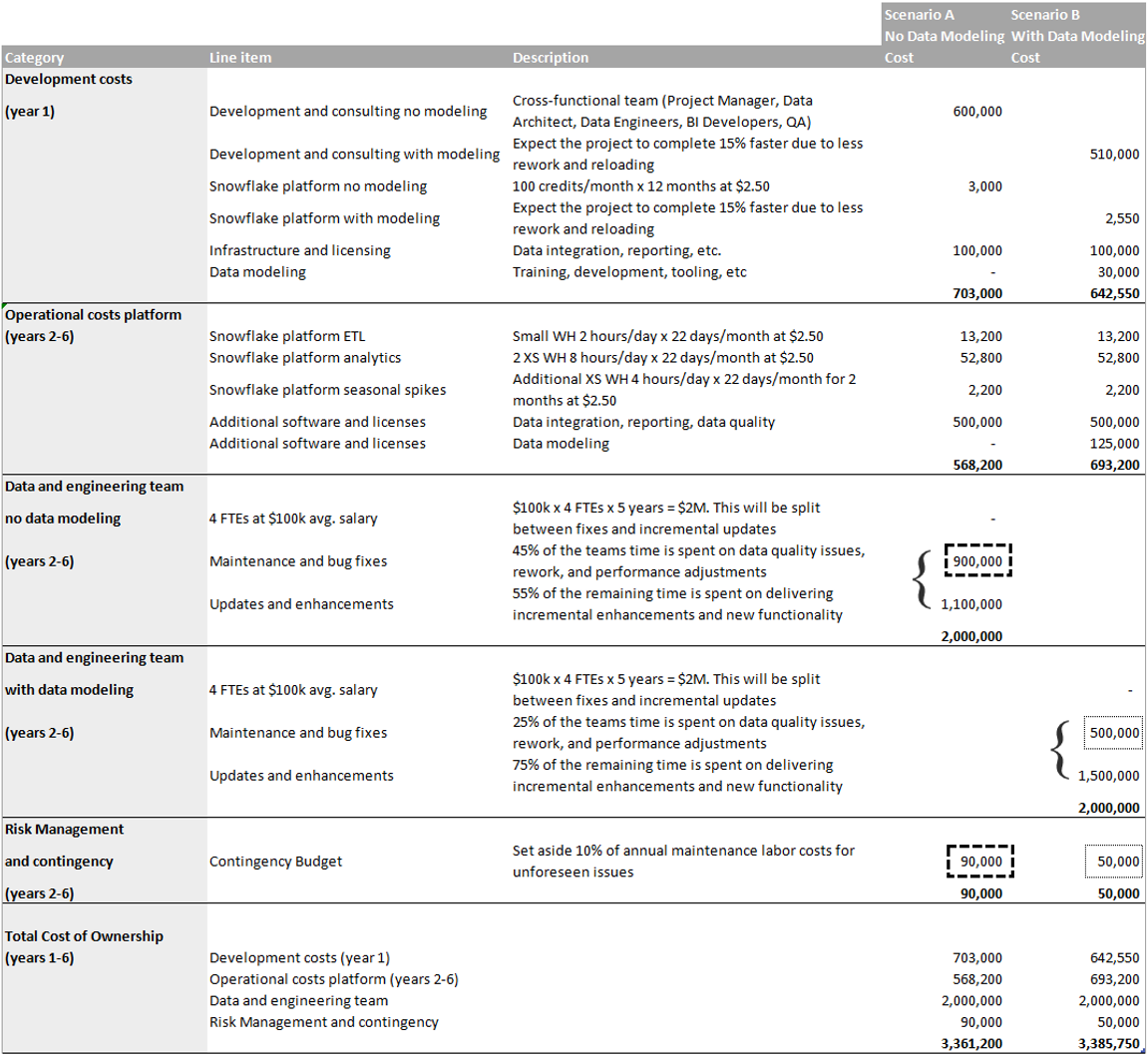
To illustrate the impact of data modeling on project ROI, consider a
medium-scale data mart project expected to take one year to complete and provide productivity gains for five years
thereafter. By comparing two scenarios—one with data modeling and one without—we can quantify the benefits in terms
that business leaders understand and appreciate.
The spreadsheet used in the example below can be downloaded
and modified to fit your project.
Scenario B, which includes data modeling, incorporates additional upfront costs
for training, workshops with business stakeholders, software and tooling, and design activities. However, these
investments yield significant returns through improved development efficiency. Better requirements gathering and
business alignment help avoid rework, reloading, and re-testing, resulting in a conservative 15% improvement in
development costs and timelines.
Perhaps most importantly, the total cost of the data and engineering team
remains constant between scenarios—only the allocation changes. This represents what I call “the secret that hides in
plain sight.” Rather than expanding to address data quality issues, teams typically steal bandwidth from value-added
work to handle fixes and maintenance. In our example, the difference between maintenance and bug fixes between the two scenarios equals roughly one full-time employee, a quarter of the data team working exclusively on fixes in the scenario without data modeling. This is not just theory. Mercadona, Spain’s largest supermarket chain, governs an Enterprise Data Model of nearly 5,000 tables in SqlDBM as the single source of truth for its Dato Unico strategy, and uses the SqlDBM API to auto-generate dbt models deployed to BigQuery., a quarter of the data team working exclusively on fixes in the
scenario without data modeling.
The Tangible and Intangible Benefits of Better Data Quality
The benefits of data modeling extend beyond immediate cost savings to create
compounding value over time. When projects include proper data modeling from the outset, they generate additional
value through incremental changes and enhancements throughout their lifecycle. Since the total bandwidth of data team
time allocated to enhancements is greater in the data modeling scenario due to less time spent on fixes, more
resources can be devoted to value-added work that maximizes business benefits.
These improvements create what economists call opportunity cost
benefits—resources that would have been wasted on rework and fixes can instead be invested in meaningful alternatives.
Over the lifecycle of a project, this momentum builds to generate truly astonishing gains in productivity and
achievement.
In our practical example, the scenario with data modeling yields a 5% greater
return on investment thanks to improved efficiencies and added value. More impressively, when we calculate the ROI of
data modeling itself by comparing the total expected benefits with and without modeling, we find that every dollar
spent on data modeling generates a return of nearly 30%.
While quantifiable metrics provide compelling arguments for data modeling
investments, the most important benefits often can’t be captured on any balance sheet. The transformation from a
low-trust to a high-trust data environment represents a fundamental shift in organizational culture that drives
long-term success.
In low-trust environments, teams resort to shadow BI implementations, spend
excessive time on fixes rather than features, and operate in a climate of blame and finger-pointing. Business users
must constantly question whether data is usable before making decisions, leading to paralysis and missed
opportunities. Conversely, high-trust environments are characterized by single sources of truth, a focus on feature
development rather than firefighting, and collaborative relationships between business and technical teams.

With better planning and alignment and less time spent fixing data quality
issues, business teams have no cause to blame or pressure the data team for inaccurate information. Data quality
fosters trust, respect, and a collaborative spirit that drives organizations forward in lockstep, creating a virtuous
cycle of improved performance and increased confidence in data-driven decision-making.
Overcoming Organizational Barriers
Despite the clear benefits of data modeling, many well-intentioned
organizations struggle with implementation due to persistent myths and organizational barriers. Common misconceptions
include the belief that data modeling is exclusively for technical teams, represents a one-time effort, or is only
relevant for large projects and organizations. These myths often stem from outdated understanding of modern data
modeling tools and approaches.
More challenging are the genuine organizational barriers that require strategic
thinking to overcome. Engineering teams often lack familiarity with business metrics, making it difficult to
communicate value in terms that resonate with stakeholders. Decentralized data ownership creates fragmentation and
inconsistency that undermines unified modeling efforts. The absence of top-down data strategy leaves individual teams
to pursue their own approaches, resulting in silos and missed opportunities for collaboration.
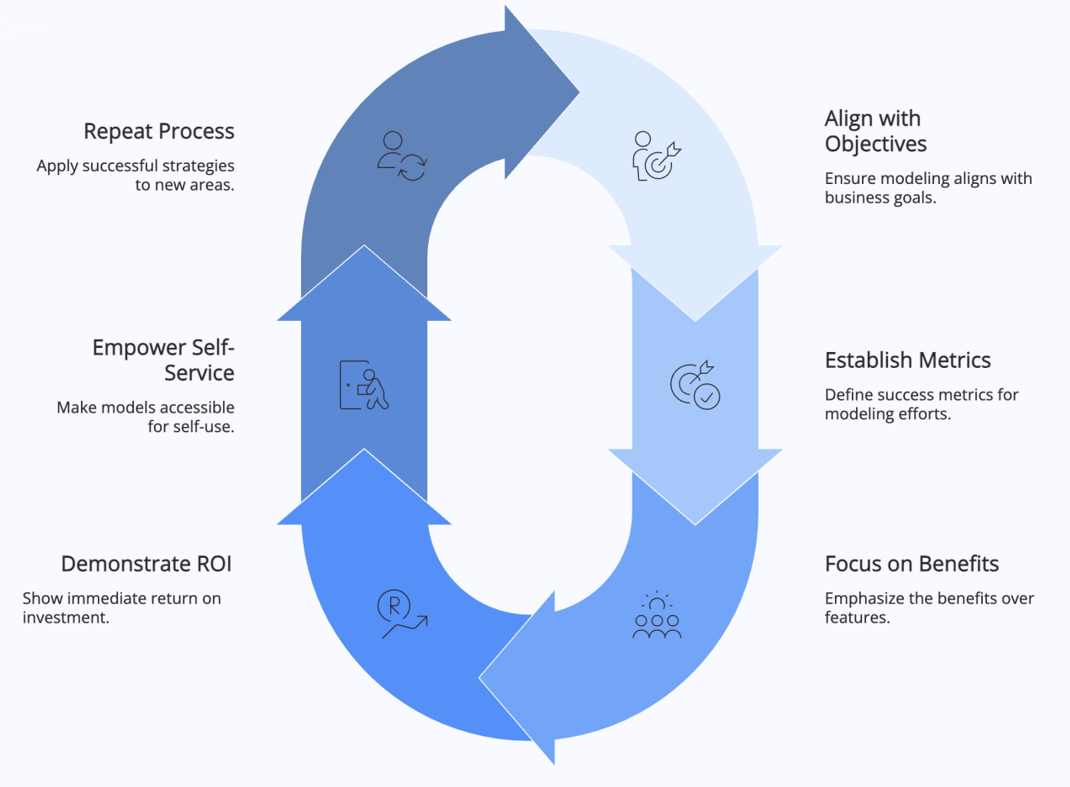
Successful data modeling adoption requires a strategic approach that builds
momentum through quick wins while addressing systemic challenges. Rather than attempting to tackle everything at once,
organizations should identify their most pressing data pain points and focus on small, targeted modeling exercises
that deliver immediate value.
The key is to prioritize projects with high-impact potential, enabling teams to
generate measurable improvements in data quality and operational efficiency. These quick wins serve as tangible proof
of concept for the broader benefits of data modeling, building stakeholder confidence and support for future
initiatives. By showcasing faster report generation, enhanced data reliability, and reduced manual reconciliation efforts, data teams can demonstrate value in terms that business users understand and appreciate. Les Mills did this by standardizing on SqlDBM as its all-in-one tool for development, discovery, governance, and CI/CD across 1,000+ Snowflake tables, a choice made after erwin was rejected over usability and maintenance trade-offs.
A clever approach to initiating these conversations involves asking business
experts to confirm something you know to be incorrect or contentious. Nothing ensures participation like giving
someone a chance to correct the narrative and demonstrate their domain expertise. Once engaged, these experts become
valuable allies in the data modeling process, contributing their deep understanding of business processes and
requirements.
The Path Forward: Data Modeling as Organizational Strategy
Data modeling represents far more than a technical exercise—it’s a strategic
initiative that can transform how organizations operate, collaborate, and compete. When properly implemented, data
modeling creates a shared language that enables better communication, accelerates decision-making, and unlocks the
full value of data assets.
The return on investment calculations provide compelling evidence for data
modeling initiatives; however, the true value lies in the cultural transformation that occurs when organizations adopt
collaborative data practices. As Ralph Waldo Emerson observed, “There needs but one wise man in a company and all are
wise, so rapid is the contagion.” Data modeling provides the foundation for this organizational wisdom, creating
capabilities that compound over time and drive sustained competitive advantage.
For organizations ready to embark on this journey, the message is clear: data
modeling is a team sport that requires collaboration between business and technical teams. The data team drives the
process with technical expertise and implementation capabilities, while business teams navigate with domain knowledge
and strategic insight. Together, they can create data models that serve as powerful tools for organizational
alignment, operational efficiency, and strategic decision-making.
The question is not whether your organization can afford to invest in data
modeling, but whether it can afford not to. In an increasingly data-driven world, the organizations that master
collaborative data modeling will have a significant advantage over those that continue to operate with fragmented,
siloed approaches. The time to start is now, and the path forward begins with recognizing that data modeling is not just about data, it is about transforming how your organization thinks, communicates, and succeeds in the digital age. More than 400,000 users globally already model in SqlDBM, the cloud-native, browser-based platform named Database Modeling Solution of the Year at the Data Breakthrough Awards two years running.