


The Blueprint Before the Build




About the company
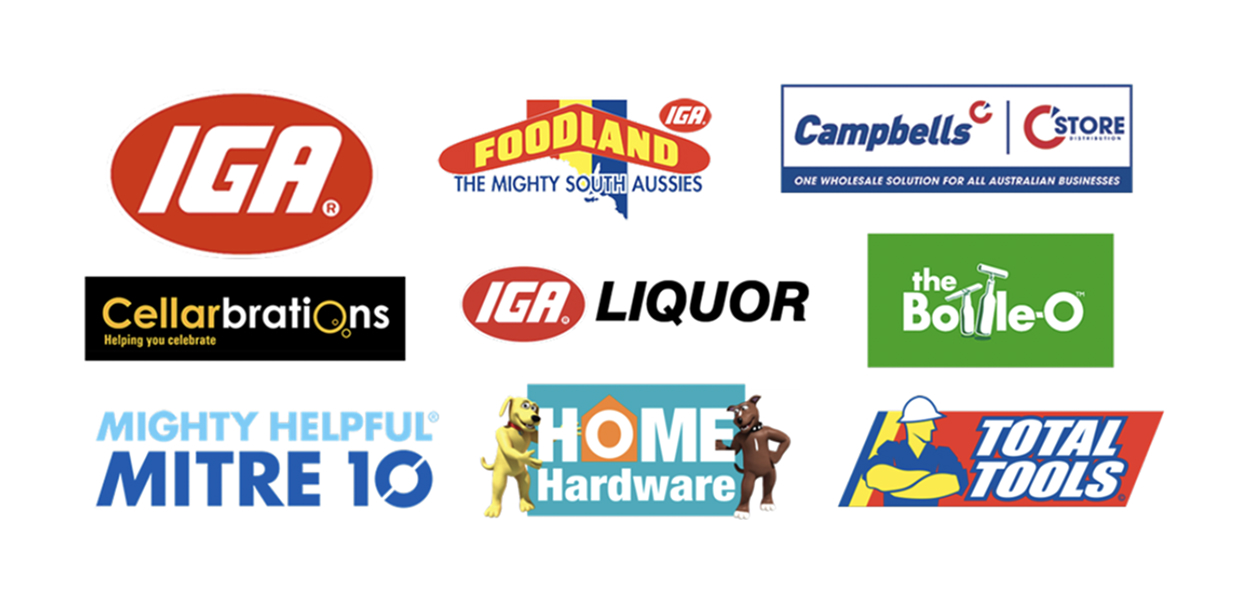
Metcash Limited, one of Australia’s largest distribution and wholesale companies, sits at the center of a sprawling supply chain that spans food, liquor, and hardware. As the backbone behind thousands of retail stores and independent business partners, Metcash’s operations depend on reliable data to track suppliers, manage warehouses, and report across its three major business pillars.
At the heart of the company’s data transformation is Sivaranjani “Shiva” Nainar, a Senior Analytics Engineer tasked with guiding both the design and reporting sides of Metcash’s evolving data ecosystem. Shiva and her team are responsible for creating the semantic models and data warehouse structures that power analytics across the enterprise; this work has only grown more complex as the company modernizes its systems.
That modernization is no small lift. Metcash is in the midst of a multi-year ERP migration alongside a shift in data platforms from SAP to Azure Synapse and, ultimately, to Microsoft Fabric. To navigate this high-stakes transition, the team adopted SqlDBM as their core data modeling tool, introducing a “design-first” discipline that ensures hundreds of ERP tables are structured, governed, and ready for downstream analytics.
Business Challenge
Before adopting SqlDBM, Metcash’s data modeling practices were fragmented and largely manual. In many cases, design work skipped the modeling step altogether, moving directly from “paper to code.” This created a fragile foundation where dependencies between tables were unclear, standards were inconsistent, and new projects lacked the visibility required for long-term stability.
The challenge was amplified by scale. With the ERP migration underway, the team faced the task of managing hundreds of database tables across food, liquor, and hardware domains. Translating these raw ERP structures into well-defined facts and dimensions was not only technically complex but also critical to ensuring accurate reporting in Power BI and other downstream systems.
Without a formal modeling process, the risks multiplied:
- Inconsistent designs emerged as different engineers took different approaches.
- Poor visibility into dependencies made it difficult to understand how one change might affect dozens of related tables.
- Onboarding challenges slowed down new team members, who had no clear map of the data landscape to follow.
Ultimately, Metcash needed more than just a tool – it needed a standardized, collaborative approach to data modeling that could align IT and business teams, reduce risk, and provide a strong foundation for analytics.
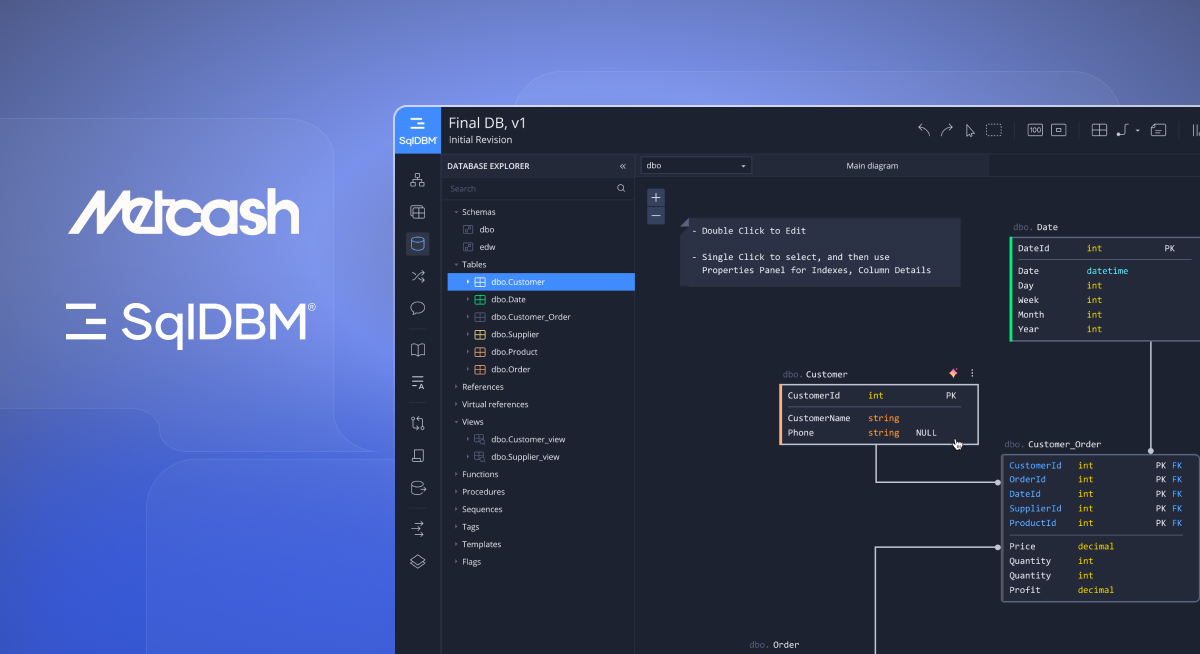
Before SqlDBM, we couldn’t really see how everything connected. Each engineer had their own way of designing tables, and there was no clear visibility into dependencies. Now, with SqlDBM, we can visualize the entire data warehouse design and understand relationships between tables before we build anything. It’s brought real structure and consistency to how our team works.
Why SqlDBM?
The decision to adopt SqlDBM was first championed by Ronald Singh, Analytics Engineer Lead at Metcash, who recognized the need for a more disciplined and collaborative approach to modeling. The team had reached a point where informal, ad hoc practices could no longer keep pace with the scale of their ERP migration and data warehouse redesign.
SqlDBM stood out as the right fit because it enabled Metcash to adopt a design-first mindset. With SqlDBM, the team could:
- Visualize schema dependencies across hundreds of ERP tables, clarifying relationships and preventing design drift.
- Standardize processes to ensure that every model followed consistent practices, reducing duplicate work and inconsistencies.
- Apply best-practice schema design—particularly Kimball/star schema patterns—to ensure models performed well in downstream analytics tools like Power BI.
“Before SqlDBM, we couldn’t really see how everything connected. Each engineer had their own way of designing tables, and there was no clear visibility into dependencies. Now, with SqlDBM, we can visualize the entire data warehouse design and understand relationships between tables before we build anything. It’s brought real structure and consistency to how our team works.” – Sivaranjani Nainar, Senior Analytics Engineer
By bringing structure, visibility, and collaboration into the modeling process, SqlDBM became the cornerstone of Metcash’s modernization efforts and a foundation for its future-state data architecture.
Before
After
Centralization & Collaboration
Losing hours on duplicate work because modeling is not done at all or done siloed in Visio/Excel, with no real-time collaboration or shared updates
SqlDBM acts as the team’s single source of truth for Synapse/Fabric design, with
visual ERDs documented and accessible across domains
Governance & Standards
Risk of data exposure without governance checks.
Standards are enforced: dimensions/facts modeled cleanly for Power BI.
SqlDBM serves as the data model and catalog of definitions
Onboarding
New team members added to the build have no clear visibility into existing models or definitions, leading to long ramp-up times and inconsistent understanding.
SqlDBM serves as the data model and catalog of definitions, giving new team members instant access to context, table designs and approved standards.
Try SqlDBM for free
Try modeling now
SqlDBM cut our modeling time by twenty-five percent by saving us much of the manual and repetitive labor.